Wicked
Gershwin Theatre
New York, NY
New York, NY
What I'm seeing lately!
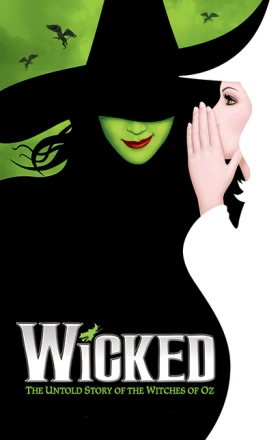
Long before Dorothy arrives in the Land of Oz, two young women meet as sorcery students: one born with emerald-green skin who is smart and misunderstood, and the other beautiful, ambitious, and popular.
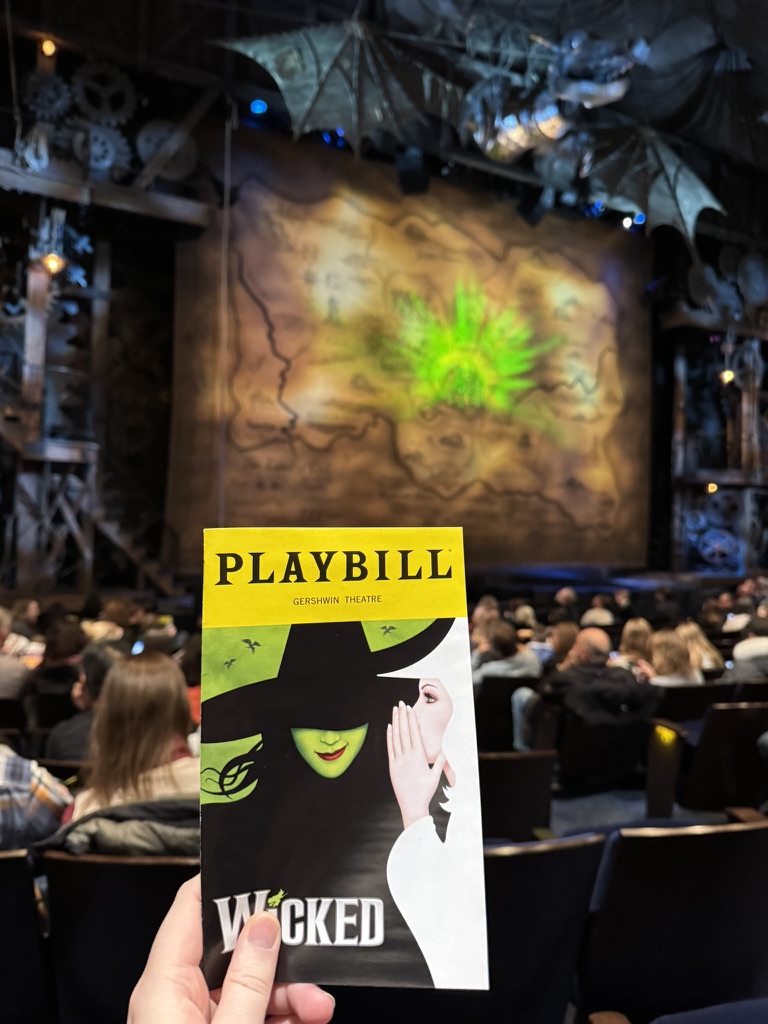
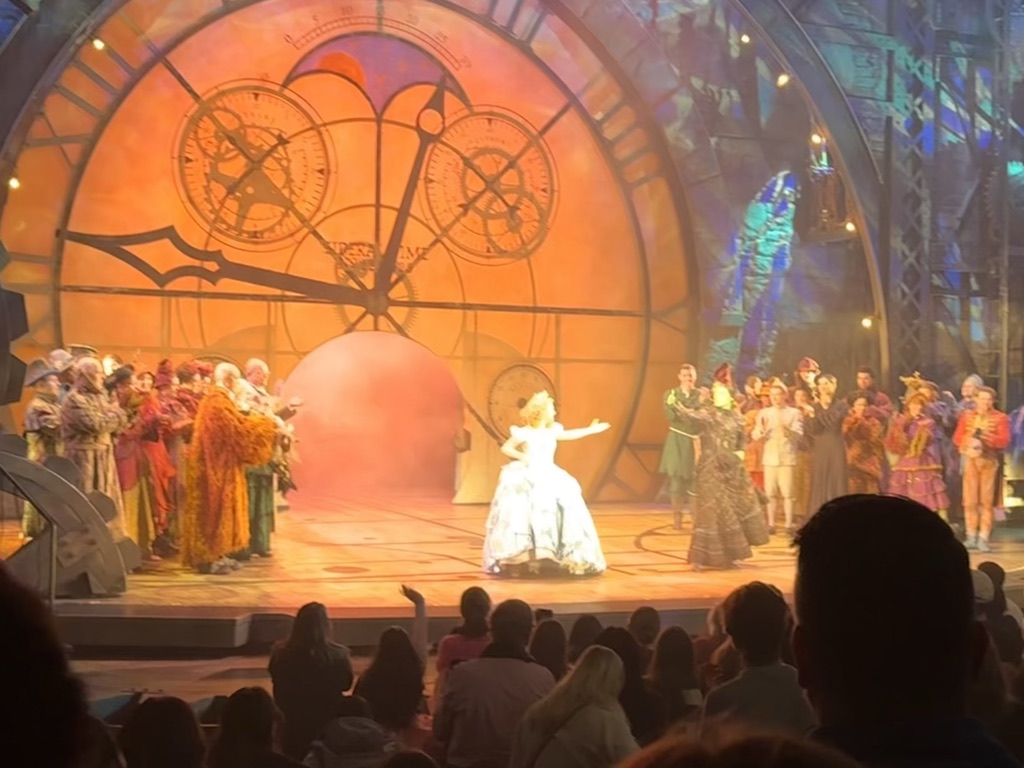
Who’s the green girl??????
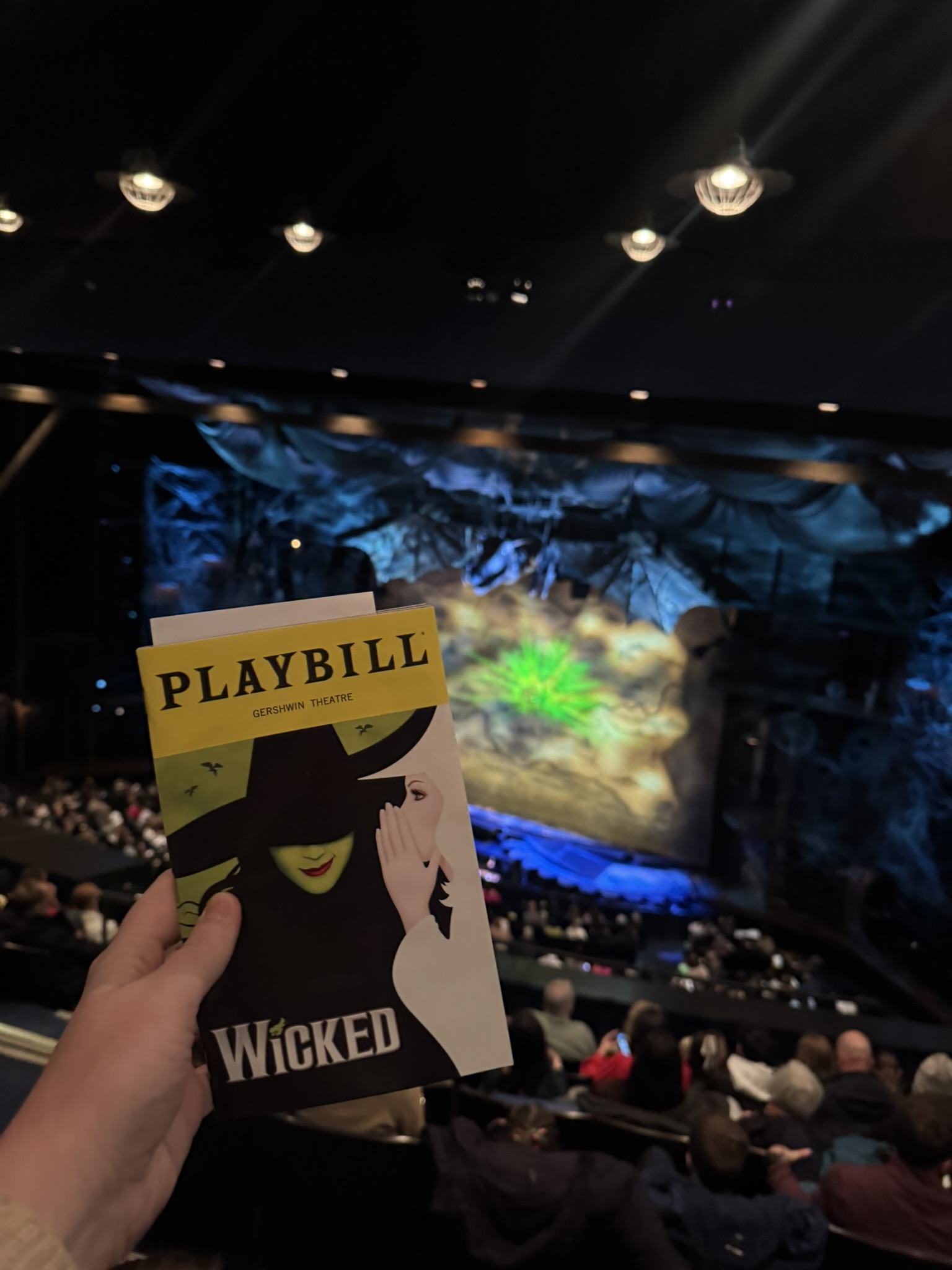
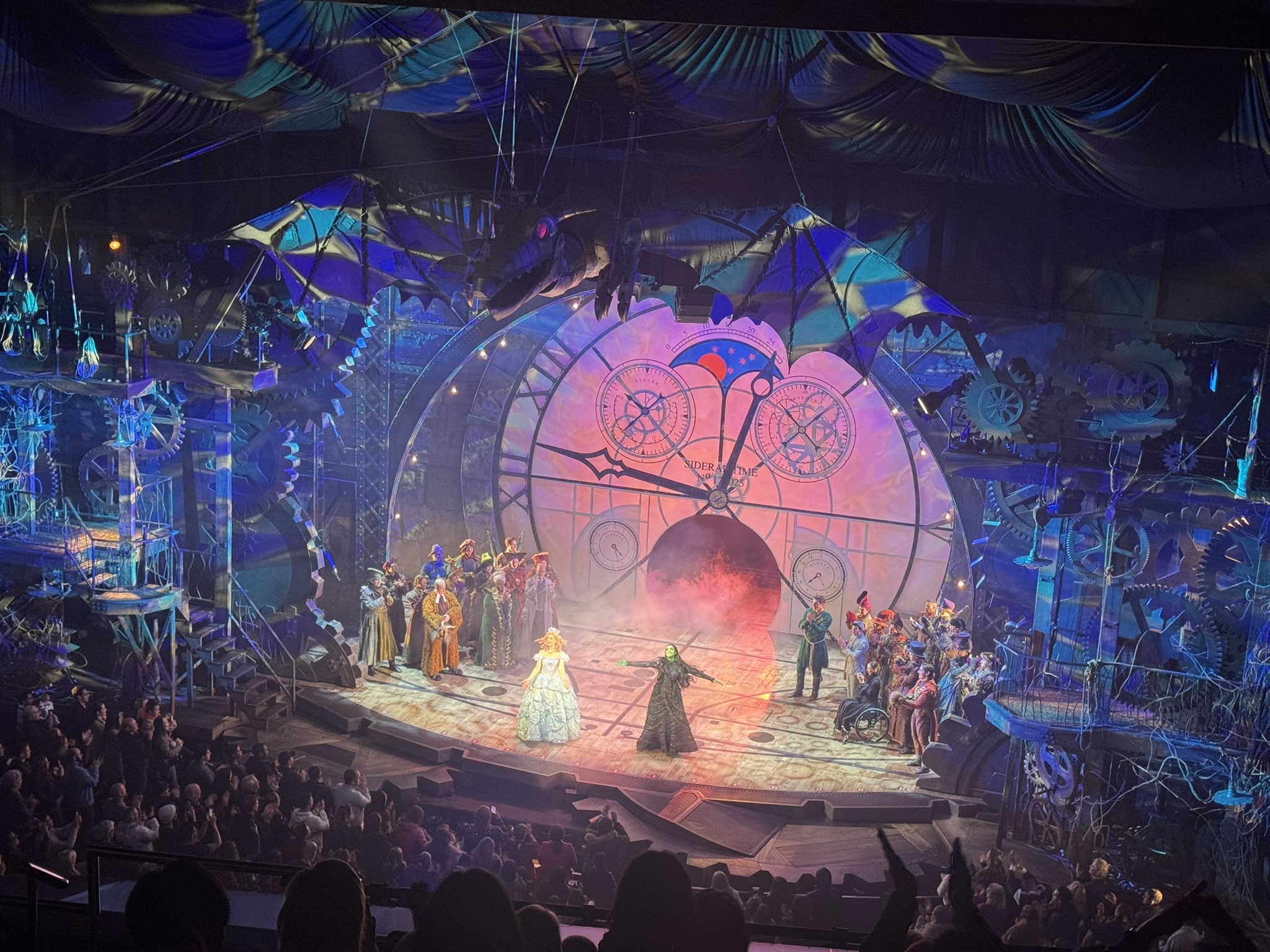
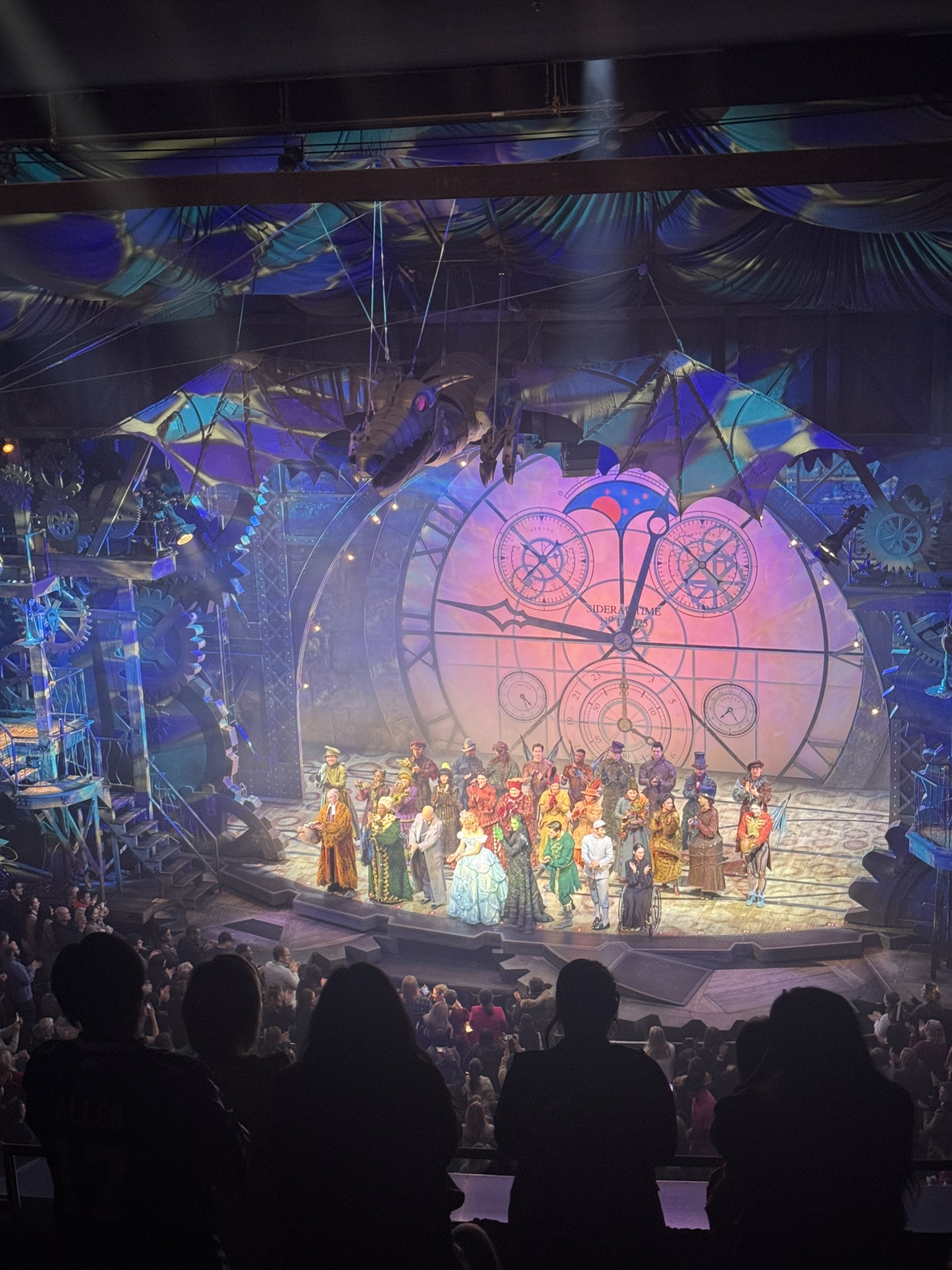
Keri René Fuller makes a fine Elphaba, but Emma Flynn is a really fabulous Glinda. :)
There’s this widely-cited theory called the “wisdom of the crowd” which supposes that a big group of people will collectively make better decisions as a result of their individual biases averaging out. It doesn’t hold in all circumstances, but it’s a pretty durable finding across a variety of scenarios, and it’s hard to write it off completely. Arts criticism is classically not especially interested in this position, no way, no how, favoring novelty of expression and formal evaluations of technical merit—the elegant filling-in of increasingly tiny corners of the map of human experience. The logical conclusion of this bias towards the esoteric is the young woman sitting alone in her dorm room reading a blurb by some jackwagon at the University of Turin about how Rubber Soul is actually a piece of shit, fervently nodding along as she spins up Abu Lahab’s seminal classic, Humid Limbs of the Torn Beadsman. Hell yeah.
Meanwhile, back in Oz, most of us have an instinctive grasp that interesting art can’t just be expression into the void—it has to cultivate some kind of relationship with an audience. The critics aren’t pretending that this isn’t the case, mind you; they’re just in the unenviable (and mostly thankless) position of having to make recommendations to a broad swath of perspectives that they can’t know, and they do their best to be rigorous about it. Populism, after all, has its own weaknesses as a sifting mechanism, filtering for the so-called “lowest common denominator.” The average member of the crowd surely has less exposure to the breadth and depth of an art form, and the wider population is susceptible at the margins to external pressures like social media and advertising spend. It may not surprise you to hear that, from time to time, things that are not so Good nevertheless become Popular.
What, then, do we make of a show like Wicked, which famously received a mixed critical reception but exploded into an enduring global phenomenon? You might think this is a straightforward question: does your heart soar when the green girl sings in the sky and runs off with her straw-man boyfriend? (A beat.) But I’d argue that it has a peculiar social connotation, as well: to like Wicked is to open yourself up to the risk of being judged as a Wicked Fan by the highfalutin Broadway bleacher creatures. It carries an implied position on the absolute or relative value of art—a signal whether you regard broad Popularity with suspicion or delight. The lede that I’m burying here is that this is, of course, the central relationship dynamic of the book. (And a corollary: Elphaba is probably flooding her ears with harsh noise whenever she’s off-stage.)
The opening number establishes a framing story in which Glinda, the pure populist, leads the citizens of Oz in a rousing celebration of the death of their political opponent. (The story, of course, is manufactured to shore up public approval.) Elphaba, the so-called witch, had been tentatively accepted by the in-group (in spite of her skin color) until she embraced intellectual elitism—she alone could understand advanced course material and its textbook, but she refuses to use the knowledge to help the powers that be. Indeed, she’s become so convinced of her high-minded moral authority that, when she and Fiyero band together to perform a Good deed, her point of view is the only one that matters, and he can hardly get a word in edgewise. Glinda, meanwhile, performs outrage, changing her name to signal allyship. Elphaba is iconoclasm tending to principle. Glinda is conformity tending to relativism.
“Are people born wicked, or do they have wickedness thrust upon them?” Glinda asks; the show spends two-and-a-half hours building a meticulous case for the latter. While a good deal of Wicked’s Popularity is surely owed to Gregory Maguire’s clever subversion of existing IP, few shows connect so consistently with a young audience, and I don’t think it’s an accident. Glinda’s central question keys deeply into the anxieties of many young women, who are aggressively priced by the world according to immutable physical characteristics. Who among us hasn’t felt like an Elphaba, judged for her own version of “green skin”? It takes gumption to avoid internalizing this evaluation—to regard yourself as a person of inherent value even as the world tells you otherwise. No surprise, either, that both witches are able to cross the threshold of self-actualization through their friendship and mutual solidarity. One puts herself out there instead of fomenting judgmental opinions alone in her bedroom, and the other advocates for herself after a lifetime of people-pleasing performance.
Ironically, it’s the show’s ability to tap into the Elphaba feeling that gives it its Glinda-like popularity. After all, what is the “lowest common denominator” but our shared humanity? Twenty-three years after release, it matters little whether Wicked the musical has technical flaws, like an uneven book or an occasional clunky lyric. What’s replaced it at the Gershwin is Wicked the cultural phenomenon, appreciating with time: a materially more coherent work of art as a 23-year-old juggernaut than at release. Maybe it wasn’t born with inherent artistic value, but it’s had value thrust upon it by a generation of young theatergoers, and sitting in the buzzy Gershwin Theatre with them as they take in their first or favorite Broadway show will never not be a delight for a witch like me. 🧹 HOOOAAAH-AH-AH-AAAHHH!