War Horse
Synopsis
When young Albert’s beloved horse, Joey, is sold to the cavalry and sent into battle, the boy embarks on a treacherous mission to bring him home.
Jul 30, 2026, 6:30 PM
I keep rolling this idea around in my head which I haven’t yet been able to properly convey to my friends, but I’ll try again here. Could you ever stage it without the horse puppet? Does it suggest anything in particular about the text if you can’t? My knee-jerk reaction coming out of the theater was that this was a wonderfully emotive show, but also that it felt totally dependent on its technical wizardry. That is to say—obviously you have to evaluate the production holistically, but—I was reserved in praising it because, although I enjoyed it, I didn’t think that it was all that interesting as a piece of writing.
Having sat with it a few days, I want to concede to myself that there’s truth to that, especially if you consider War Horse as a human drama. If this is a story about the two primary caretakers of the horse, the British boy Albert and the German officer Friedrich—e.g. the horse is a prop and could merely be gestured at in space—then, sure, it has trite aspects. Act 1 is warmed-over boy-and-his-horse syrup, then Act 2 finds an interesting angle in comparing how the Brits and the Germans treat the horse as opposed to each other. However, focusing narrowly on these elements is misreading the narrative of the play.
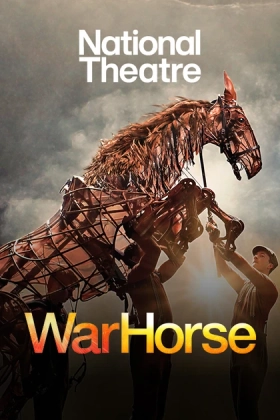
The plain fact is you’ve got to have Joey the horse on stage because he’s the main character. Duh, you say? Now, look here, smartypants: equine protagonists aren’t all that common in the medium, not least because horses can’t act, and in this thousand-word essay I will—okay, okay. But consider: even the author of the original 1982 novel, Michael Morpurgo, said it was crazy to adapt it to the stage. Directors Marianne Elliott and Tom Morris had a vision for how they’d make it work with the Handspring Puppet Company, then they asked Nick Stafford to come in and adapt the book. Each time War Horse is staged, revived, or toured, it’s a faithful remount of the same production.
But even if you don’t know all that—I did research after the fact—you can glean while you’re watching it that War Horse is intrinsically, inextricably linked to its directorial vision. The Joey puppet is the show. The staging is the story. If you pop open a copy of the script, you’ll find a fabulous disclaimer at the front that, while there’s going to be a ton of stage directions for horse scenes, those directions aren’t enough, so you need to write your own second script. What text Stafford gives you is intended to be only a starting point for the real piece.
Lest you mistake any of this for cynicism, I think this show is brilliant and its cart-before-the-horse provenance is fascinating. It could have so easily been a dud, but Joey is so expressive and lifelike that all the emotional beats land, even in cases when they feel slightly unearned by the text. Watching three people operate the horse is a choreographic miracle. Perhaps War Horse is secretly a dance piece—its place in the theater canon next to Chorus Line and West Side Story, its iconic movement destined to be remounted forevermore. Come back soon, my friend.