Sarah on theater

What I'm seeing lately!

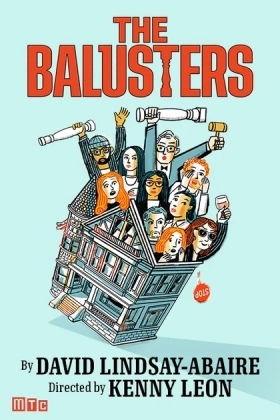
The Vernon Point Neighborhood Association is a passionate bunch, whether squabbling over historically inaccurate porch railings or debating trash can protocol. When new resident Kyra wants to make some changes to the HOA, it’s a case of an irresistible force meeting an immovable object, proving that things can be welcoming and positive until the boat gets rocked.


★★★★

Allegorically rich, mildly highbrow; a wealthy liberal send-up in the same family as MTC’s Eureka Day last season. A baluster, one neighbor explains, is a (five-dollar word for a) support post holding up a handrail for a porch or stairs, a symbol here for the people comprising and supporting a community. The play invites us to consider how switching out the balusters changes the nature of the structure and whether it’s virtuous to try to preserve its original character.

This is but one of the issues on the agenda at a series of neighborhood HOA meetings, which eventually show their colors as proxy disputes for the scarcity problem undergirding practically everything in politics. When there aren’t enough nice things to go around (whether as a consequence of simple supply, ineffective distribution, or hoarding), and only some people get to have the nice things, invariably you end up with the same two teams. The “haves” and “have-nots” advance all manner of arguments—sometimes very convincing, defection-inducing ones—for whether the “haves” ought to be able to hang on to their good fortune or spread it around. More often than not, they get to keep it, because one of the things they have is inertial institutional power, and it’s hard to convince someone to give that up voluntarily.

This produces a mutual hypocrisy more visible from the other side of whichever fence: you hear elaborate arguments, but you see people rationalizing their own self-interest. And, indeed, this is where the story leads for this group of wealthy neighbors, who get together to discuss the neighborhood business over wine and canapés and turn a straightforward agenda into a knock-down, drag-out affair. Everybody gets their specific brand of hypocrisy dragged through the mud; one harsh sequence sees the silver-spooned woman who slings privilege allegations slammed as a white savior and mocked when she cries, to give you an idea of the tenor. That the characters all lead abundant lives underscores how much of their dispute is just smokescreen over a banal power struggle. It’s written to be (and is) pretty funny, and I appreciated David Lindsay-Abaire’s even-handed treatment of his principals. (I recently registered a more lukewarm take on Roundabout’s Chinese Republicans, which brushes against similar ideas but more tidily picks teams good and evil.)

Kenny Leon’s production gets the job done. It’s nothing terribly high concept—just a nice set that feels true to a wealthy suburban living room, and the foyer and dining room in the background are satisfactorily fleshed out and well-lit, too. It suits the fast-paced ensemble dialogue just fine to get out of the way and let the cast do their thing. Performances are strong across the board, but if I had to pick a highlight, it would be Richard Thomas as the nice-but-overbearing chairman of the board with no term limits. Probably the biggest flourish is that Leon can’t resist the temptation to add electronic and hip hop beats between scenes, but I felt it worked better here to keep the energy up than it did in last year’s anachronistic Othello.

Ultimately, Lindsay-Abaire comes to a point that a politics that doesn’t tend to the needs of its current constituents is one that ceases to be useful. Different balusters aren’t necessarily bad ones, but they are different, and something might be lost in the change—but something else is gained, too. “Why not me?” is not such a bad question to ask, as long as you can hold a little space for the fact that everybody else is asking it too. Solid play; nice foil for the crowd-pleasers.