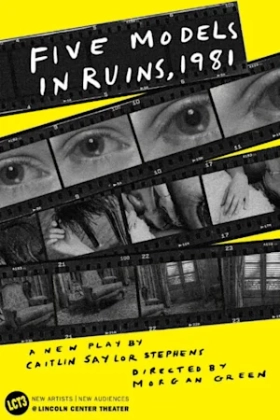
Five Models in Ruins, 1981
Synopsis
An ambitious fashion photographer gathers five models at a crumbling English country estate for a career-defining Vogue cover shoot in Princess Diana’s rejected wedding gowns.
May 31, 2025
I’ve wanted to adjust this up to 5 stars, but couldn’t really figure out why I liked it so much. I added some bonus spoilery thoughts to the bottom.
Elizabeth Marvel’s sustained performance in this is really impressive. She’s a complete chameleon and disappears into the role of this photographer, spending the entire runtime (and then some - you can see her in the background of my playbill photo 10 minutes before the show) on stage tinkering with the set and photography equipment to get her shot right in between speaking parts.
Speaking of that set (and the props), wow, the attention to detail! Watching them pull a covering off old furniture and seeing a cloud of dust rise up is cool. I was really immersed.
It’s an enjoyable script, but more interested in establishing a scene than a propulsive plot. The models sound like the playwright has a dog-eared copy of “I Love to Hate Fashion” and are satisfyingly distinct. They’re mostly easy to dislike (which I fully mean as a credit to the actresses) and they spend a lot of the runtime trading barbs & stories about prior shoots, changing clothes and makeup and hair on the stage. So committed!
It all adds up to, I think, a reasonably thought-provoking reflection on human beauty, its ephemerality (the house was grand once too, and the models approach their mid-20s), how our perception of it is influenced by the trends and times, and what it’s like to have it, want it, & behold it. Competitiveness. Solidarity. Teamwork. Cruelty!
And, oh boy, the ending. I suspect I will remember this play far longer than most. I have no idea if it “works” “dramaturgically” but it’s such a hilarious burst of relief that I loved it. (It’s a bit Sarah-coded. I’m a wailer.)
So, like, at the end of the play, Elizabeth Marvel’s photographer and her five titular models find out that the photo shoot won’t make the cover of Vogue, and they fall in a pile on the ground loudly wailing and gnashing their teeth for, like, several minutes. It’s crazy. The rest of the play isn’t like that at all, and it would be defensible to write this scene out of it, but it really ties a peculiar bow on the thing for me.
One of the (many) frustrating things about beauty standards and the industry around them—one is immersed in trends and mountains of obligatory products and treatments and procedures and this and that—for all the promises all these things make, it still feels like at some point you hit a wall. There’s a lot you can do to alter and dress up your body, but there is a limit, and for most people there’s a soft limit somewhere below that which they’re unwilling to exceed. The time and effort you invest matters, but it’s ultimately still a function over your natural gifts.
Not every day is like this, but now and then I’ll have a bad day when it all feels like a great exercise in futility. I’ll do absolutely everything I can and still not look as good as a random woman on the street. It’s frustrating in a way that feels more existential than it should, because the world tells me as an ostensibly feminine person that a significant part of my value is ornamental. And sometimes I’m tempted to have this outsized reaction to the unfairness of the thing.
I think what I really loved about “Five Models in Ruins, 1981” is how weirdly perfectly it captures this ugly brain-lurch—of knowing all the names of these stupid brands and products and tools and services and working so hard to primp and then abruptly feeling like it’s for nothing. Laughing at that scene made me feel like I was laughing at myself in a way that’s not always easy for me. It’s irrational, but sometimes I am too. It’s outlandish, but sometimes I am too. It’s childish, but, gosh dang it, sometimes I am too.