Death of a Salesman
Winter Garden Theatre
New York, NY
New York, NY
What I'm seeing lately!
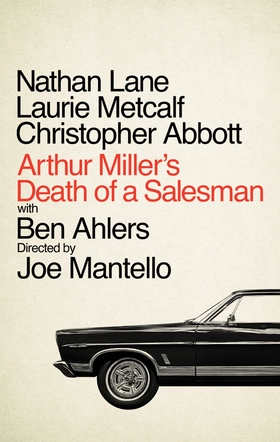
Aging traveling salesman Willy Loman struggles with the decline of his career and mental state while grappling with his disillusioned family and the failure of the American Dream.
Not to be a dweeb about it, and this is not at all my usual mode of inquiry, but I do think it’s worth at least a passing thought whether you can meaningfully bemoan the failed promise of the American Dream or register a criticism of capitalist exploitation with a glossy, prestige-cast, $100-a-seat-plus Tony-bait production at the Winter Garden. Supposing for the sake of argument that that underlines the themes rather than undermining them—still not entirely flattering, but not totally spiritually bankrupt—the performances are as evocative as the names would indicate. Laurie Metcalf turns in her second stunner of the season after Little Bear Ridge Road (which shared much of the same team, including controversial lead producer Scott Rudin). Broadway debutant Ben Ahlers, who I understand is billed on the poster for his prominence on TV, sneers his way to a terrifically skeezy Happy.
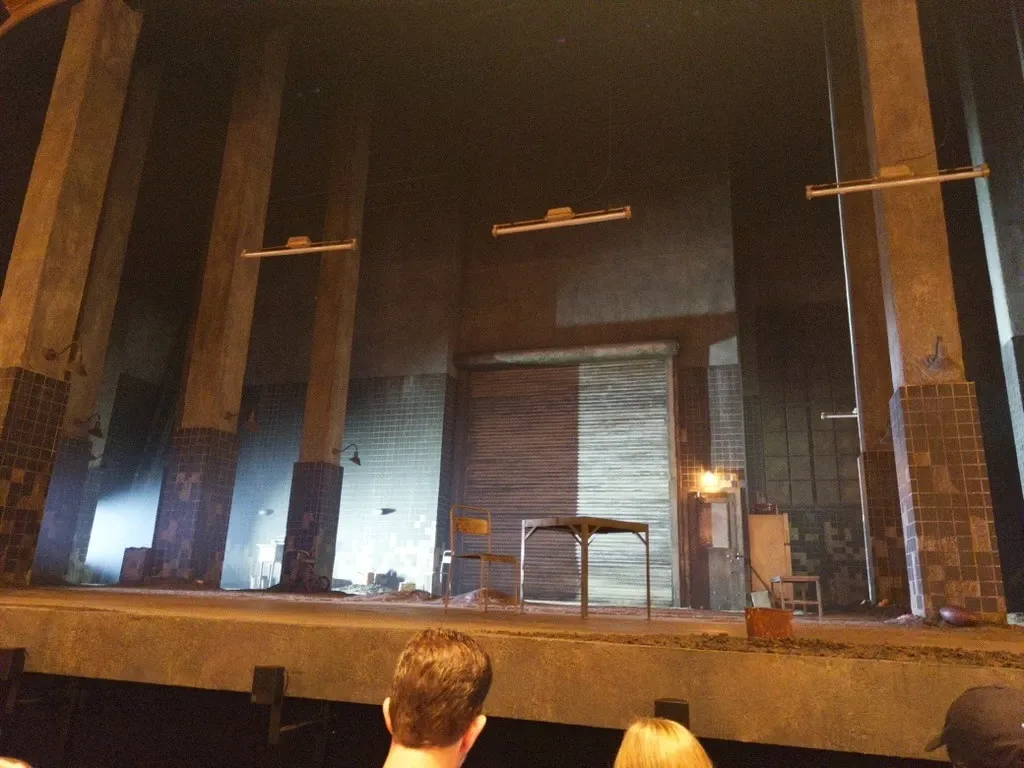
The staging is thoughtful and well-designed, if perhaps a bit heavy handed. Director Joe Mantello makes the interesting choice of discarding a number of Arthur Miller’s stage directions in favor of overt symbolism. In lieu of a Loman house set, the stage is a vast, dilapidated industrial garage that appears to extend upwards indefinitely. Nathan Lane’s Willy enters and exits the play by driving a physical car into and out of the garage, where it remains center-stage for the bulk of the runtime. The car is further linked to Willy’s physiological decline by having flashback characters—separately cast Younger X, Y, and Z—enter the stage by unexpectedly emerging from the car. Punching up the car-as-self places additional emphasis on lines describing its falling into disrepair: the odometer ticking upwards, the need for replacement parts, not being able to own it while you can enjoy it, the desperation to pay insurance. And the busted-up garage, where one might otherwise rehabilitate their vehicle, is analogous to the dysfunctional Loman household—no safe harbor for sick Willy.
Taken together, you might say that this production is all-in on a thesis of the working world driving the common man until he breaks down, and it extends that thesis to all of us working for a salary (or unemployed and disaffected) in the present day. Willy decries his younger boss for discarding him as an orange peel after the fruit is eaten; the technology-obsessed boss, Howard, is dressed anachronistically in the iconic tech executive Patagonia vest and clutching a Starbucks cup, which renders his denial of “just $40 a week” especially heartless.

I think the downside of all these changes is that they come at the expense of the personal tragedy—or, put another way, they let Willy off the hook too much. The central relationship with his son, Biff, is underdeveloped somewhat by splitting that role between older and younger actors. Christopher Abbott does a fine job when he’s on the stage, but he’s on the bench in favor of another actor more often than you’d expect, and the younger actors for Biff and Happy are insufficiently telegraphed who’s-who by costuming or behavior. (More a theatrical trade-off than a flaw—consider the inverse in the West End’s recent Benjamin Button.) Moreover, I think the degree to which this pushes systemic critique implies that what happened to the Lomans is inevitable, which is an incomplete read of Arthur Miller’s text. He includes the Charley and Bernard characters to emphasize that persistent opportunities were there to get out of the mire, but Willy and Biff turn them down again and again out of pride and misplaced priorities. Equating Willy so directly with the car suggests that he’s not at the wheel of it—but he made the active choice to adopt the identity of a salesman first and a man second, to try to sell a vision of himself even at the expense of his and his family’s health.
Death of a Salesman is a tragedy of bad decisions within an unforgiving system, not a show of inevitable outcomes for its participants. The rules are hard to divine and the punishments are outsized, but the Willy Loman situation, at least, was navigable with a little introspection and humility. This is hardly a bad production, but I found it a little too sympathetic.